 EPDM Foam Manufacturer
Closed cell vs open cell EPDM foam
Same polymer, two completely different behaviours. The cell structure — sealed or interconnected — decides whether the foam stops water and heat, or absorbs sound.
The structural difference
Both grades start from EPDM rubber. In closed cell foam each cell is a sealed pocket of gas: nothing passes between cells, so the material resists water and vapour and insulates thermally. In open cell foam the cell walls have ruptured, so the voids connect to each other and to the surface: air can move through the material, which is exactly what makes it a good acoustic absorber.
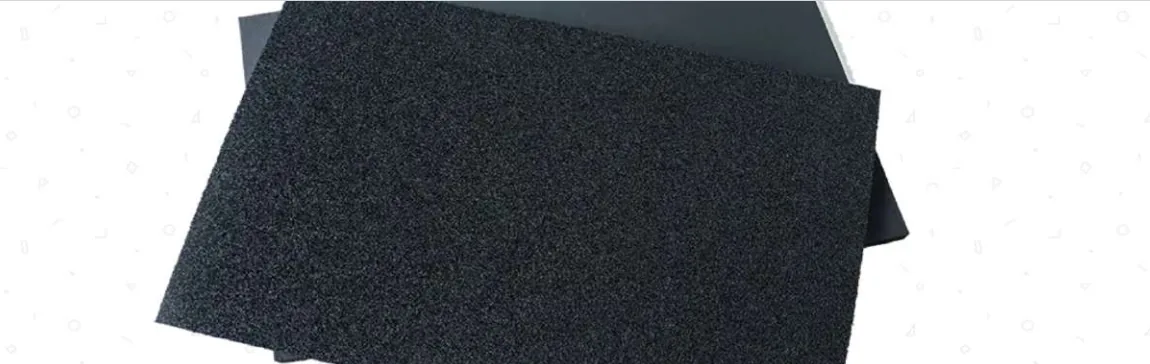
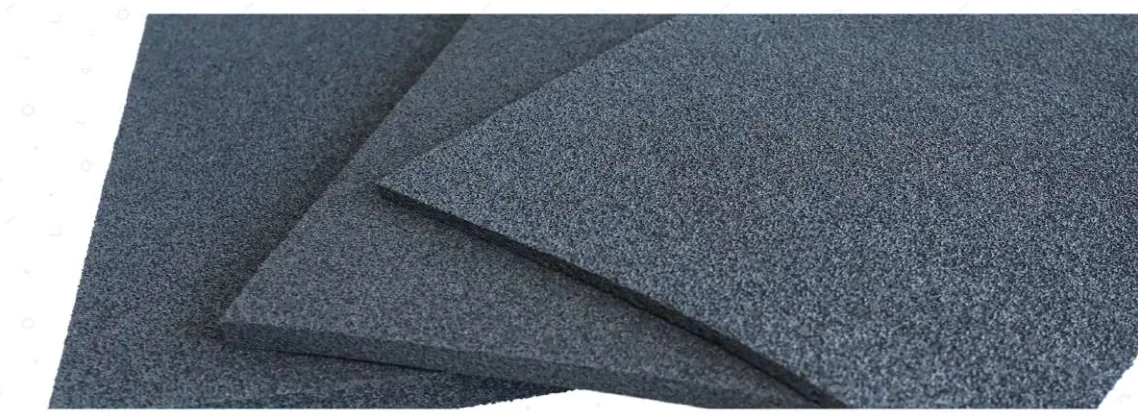
Behaviour side by side
| Property | Closed cell EPDM | Open cell EPDM |
|---|---|---|
| Water absorption | Very low — sealed cells | Higher — water can enter the cell network |
| Thermal insulation | Best — trapped gas is the insulator | Lower |
| Sound absorption | Blocks and reflects | Best — moving air dissipates acoustic energy |
| Softness / conformability | Firmer, resists compression | Softer, conforms to uneven surfaces |
| Sealing against water, dust, vapour | Best | Not suitable |
| Typical density range at Gabrielia | 70–200 kg/m³ | 80±10 / 100±10 / 120±10 kg/m³ |
| Typical thickness range | 2–40 mm | 2–60 mm |
| Hardness | Shore 10–20 (customized) | Customized |
Choose closed cell when…
- The part must stop water, moisture or dust — exterior seals, HVAC lines, refrigeration piping.
- Thermal insulation is the main function, or condensation control matters.
- The seal needs reliable recovery after being compressed for years.
- The application is automotive sealing: doors, windows, glazing, expansion joints.
Choose open cell when…
- The goal is sound absorption in vehicles, appliances, machinery or buildings.
- The foam must sit against uneven or curved surfaces and stay soft.
- Breathability is required, or the part is laminated behind another barrier anyway.
- You need thicker sections — our open cell range goes up to 60 mm.
Customization available on both structures
Both open and closed cell grades can be supplied with a skin on one or both faces, in sulfur-free versions for metal contact, and in big-cell, small-cell or higher-hardness variants. Certifications: REACH and RoHS, with IMDS declarations available for automotive programmes.
Frequently asked questions
Which is better for sound insulation, open cell or closed cell foam?
Open cell foam generally absorbs more sound because its interconnected cells let air move and dissipate acoustic energy. Closed cell foam reflects and blocks more, but is primarily chosen for water and thermal sealing.
Does closed cell foam absorb water?
Closed cell EPDM foam has sealed cells, so water absorption is very low compared with open cell. This is why it is used for exterior seals, HVAC and refrigeration insulation.
Can open cell EPDM foam be used outdoors?
EPDM itself is highly weather resistant, so open cell EPDM foam holds up outdoors better than many open cell materials. However, because water can pass through the cell structure, it is normally used indoors or behind a closed barrier.